
Facial Oil for Oily Skin: Why It Works and How to Choose
- 8 min read
Written by the YANNARA Formulation Team · Reviewed by Rudolf Ian Ballena, MSN, RN, OCN, and Julie Valenzuela, RN
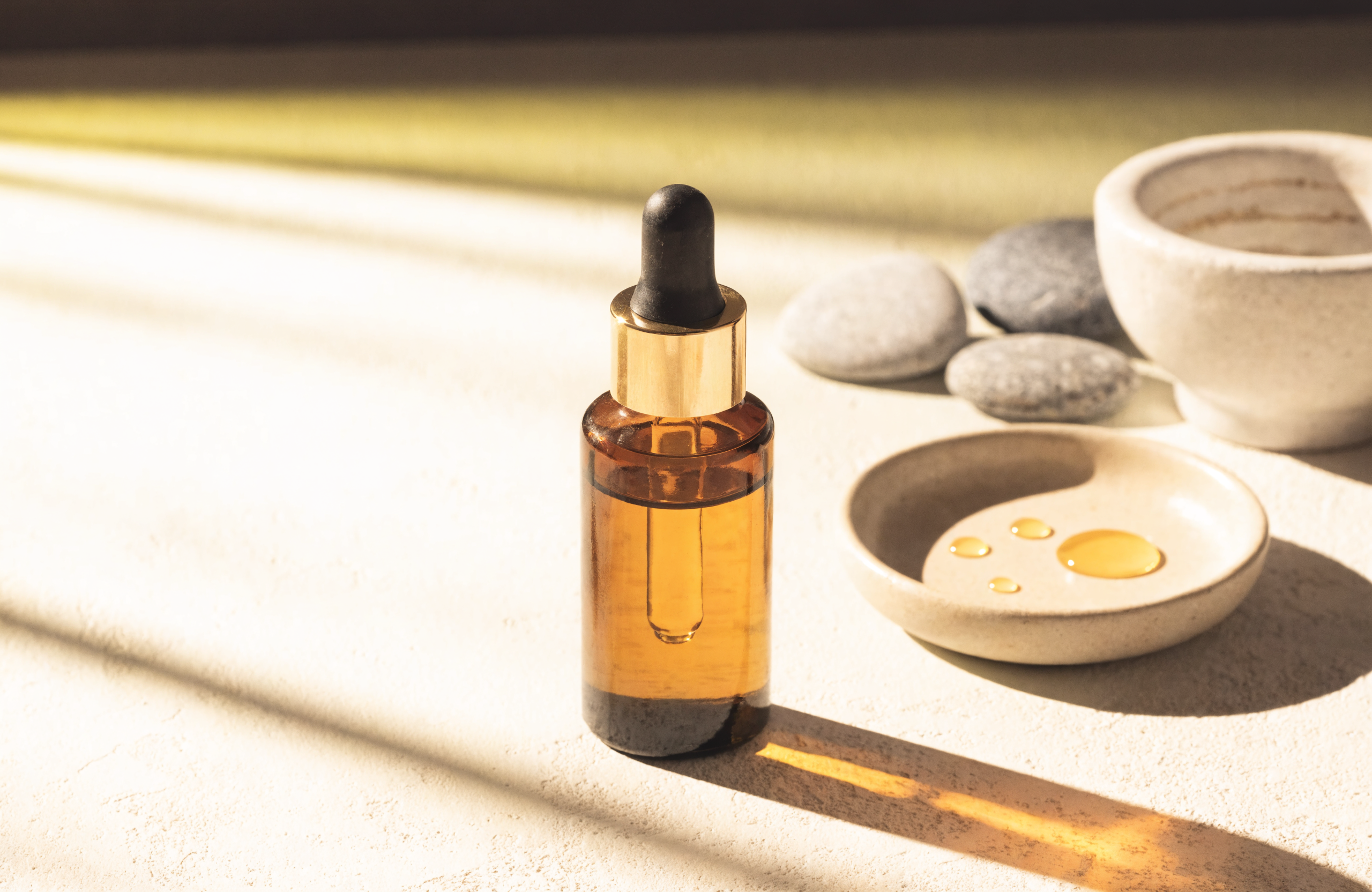
If you’ve ever tried a facial oil and your skin felt greasier, shinier, or more congested, you’re not alone.
This is why many people with oily or acne-prone skin avoid oils completely.
But the issue is rarely oil itself.
It’s which oil — and why it was chosen.
Most facial oils are designed for dry or normal skin. They use rich, heavy triglycerides that add surface comfort and slow water loss. Applied to oily skin, they do what they were designed to do: sit on the surface, create a film, and add to the load of oil already there.
So the conclusion becomes: “Oils don’t work for my skin.”
In reality, the problem is not oil. It’s a composition mismatch. And to understand it, you need to understand what oily skin is actually missing.
The Sebum Composition Question
Oily skin doesn’t just produce more sebum. It may produce sebum with a different fatty acid composition.
Some acne and sebum research has reported lower linoleic acid levels in acne-prone skin surface lipids. This matters because linoleic acid (omega-6) is a structural component of the skin’s barrier lipids — and when it’s low, the barrier is less effective, which can prompt more sebum production as a compensatory response.
Lower linoleic acid levels have been proposed as one factor that may influence follicular plugging and comedone formation, but acne is multifactorial. Hormones, genetics, follicular keratinization, inflammation, and routine behavior all play a role. A topical oil does not treat acne — but it can be a better or worse compositional fit for oily skin depending on its fatty acid profile.
This is the relevant framing: not that oily skin has a deficiency that a product corrects, but that some oil compositions are meaningfully more compatible with oily skin’s lipid environment than others.
Why Most Oils Make This Worse
Most facial oils are oleic-dominant. Argan, marula, avocado, sweet almond — these are widely used in skincare because of their richness, stability, and emollient feel. They are excellent for dry and barrier-stressed skin.
On oily and congestion-prone skin, they are often a poor match.
Adding oleic-heavy oil to skin that is already producing oleic-dominant sebum doesn’t address the composition question. It adds weight and surface film without providing a different fatty acid input. The skin doesn’t feel more balanced. It feels heavier.
This is why the experience is consistent: you try a facial oil, your skin feels congested or shinier, and you conclude oils aren’t for you.
The conclusion is reasonable given the oil. But it’s the wrong conclusion about oil in general.
What Linoleic-Forward Means
A linoleic-forward formulation is built around oils where linoleic acid (omega-6) is the primary fatty acid — not a secondary one.
Linoleic-rich oils absorb more efficiently because linoleic acid integrates more readily into the skin’s lipid structures. They don’t leave the same surface film as oleic-dominant oils. They dry down quickly, with a finish that feels closer to nothing than to oil.
This is not a subtle difference. On oily skin, the performance gap between a linoleic-forward and oleic-dominant oil is significant and immediately perceptible.
The formulation challenge is stability. Linoleic-rich oils are more prone to oxidation than oleic-dominant ones, which is why many formulas use oleic oils by default — they’re easier to keep shelf-stable. A well-formulated linoleic-forward oil requires more attention to antioxidant protection and packaging to maintain performance over time.
The Dehydrated Oily Skin Pattern
There is a pattern that affects many people with oily skin: the surface is visibly oily, but the skin underneath feels tight, flat, or uncomfortable.
This is not contradictory. Oil and water behave independently. Sebum sits on the skin’s surface — it does not provide the internal hydration that the deeper layers need. Oily skin can produce excess sebum and still be significantly dehydrated.
What makes this worse is the typical response to oily skin: harsh cleansers, alcohol-based toners, skipping moisturizer. Each of these removes surface oil without addressing the hydration deficit. The skin — sensing that its barrier has been disrupted — produces more sebum in response. The cycle continues.
The correct approach reverses this. Address hydration first: a humectant serum, a balanced moisturizer that doesn’t occlude the skin, and a routine that doesn’t disrupt more than it needs to. Then, once the hydration layer is in place, a lightweight lipid step can support balance without adding surface heaviness.
Where Oil Fits in the Routine
For oily skin, a facial oil belongs at the end of the routine — after serums and moisturizer, not before.
Applying oil over a hydrated surface improves distribution. The oil spreads more evenly, requires less product, and integrates rather than pools. On oily skin, what’s needed is a thin, even lipid layer that doesn’t disrupt the balance achieved in earlier steps.
A few drops is usually sufficient. More product doesn’t mean more effect — it means more surface residue. The goal is to integrate, not to cover.
If your skin is combination-oily — oily in the T-zone, drier on the cheeks — spot application is worth considering. Use the oil where the skin needs it, not uniformly.
What to Look For
If you have oily or combination-oily skin, these are the composition and performance markers that matter:
Linoleic-forward fatty acid profile
The primary oils in the formula should be high in linoleic acid, not oleic acid. This determines how the oil integrates with your skin’s existing composition.
Dry or fast-dry finish
A correctly formulated oil for oily skin should leave no visible residue after absorption. If it leaves a shine, the formula is not suited for this skin type.
High spreadability, low volume
The product should distribute evenly with a small amount. Oils that require more product to spread are usually heavier than appropriate.
Low occlusiveness
For oily skin, you don’t need the skin sealed from the environment. Highly occlusive oils trap heat and increase the sensation of heaviness.
Non-comedogenic composition
Linoleic-dominant oils have a lower comedogenic tendency than oleic-dominant ones — they are a better compositional fit for congestion-prone skin.
Why Structure Matters
Most brands treat oils as finishing products — applied at the end, optional, primarily sensory.
At YANNARA, oils are structural. They determine how a formula spreads, how it absorbs, how it interacts with the skin’s own lipid environment over time. Choosing an oil is not an aesthetic decision. It is a formulation decision.
This is especially true for oily skin, where the wrong oil actively works against the outcome you’re trying to achieve.
The Formula Architecture approach starts with the skin’s need — in this case, a linoleic-forward composition and a dry-veil finish — and builds backward from there. The sensory outcome follows the compositional logic, not the other way around.
For a deeper understanding of this approach, read: → Why YANNARA Began With Oils (And Not Creams)
A Note on Acne-Prone Skin
If your skin is inflamed, painful, cystic, scarring, or persistently breaking out despite consistent routine care, a dermatologist is the appropriate starting point. Facial oils are cosmetic products — they can support skin feel, barrier compatibility, and routine design, but they do not treat acne. For active or clinical acne, professional guidance matters.
The Oil Designed for This Skin Type
Banayad — Gentle Pure Veil™ was built from this formulation logic.
The fatty acid architecture is linoleic-forward. The oils were selected for their absorption rate, their compatibility with oily and congested skin, and their ability to deliver a dry-veil finish — meaning the oil integrates fully rather than sitting on the surface.
The formula also includes an oil-soluble vitamin C derivative, selected for compatibility with an anhydrous lipid system and for its role in supporting the appearance of more even, radiant-looking skin.
Banayad is designed for the oily-skin pattern YANNARA sees often: visible surface oil, congestion-prone behavior, dehydration underneath, and a need for a lightweight dry-veil finish.
The goal is not to add more oil to oily skin. It is to choose an oil system that better matches the lipid profile and sensory needs of oily or congestion-prone skin.
→ Explore Banayad — Gentle Pure Veil™
Find Your Ritual
Not sure where to start?
→ Find your ritual through the YANNARA Ritual Quiz
Also in This Cluster
→ Facial Oils: Benefits, Myths, and How to Choose
→ Facial Oil Resource Guide
→ How to Repair a Damaged Skin Barrier
→ Personalized Skincare vs. One-Size-Fits-All
Frequently Asked Questions
Can oily skin use facial oils?
Yes — but only if the oil is linoleic-forward and formulated for fast absorption. Oleic-dominant oils are a poor compositional match for oily or congestion-prone skin.
What is linoleic acid and why does it matter for oily skin?
Linoleic acid (omega-6) is a fatty acid found in skin barrier lipids. Some research links lower linoleic levels to acne-prone skin surface lipids. A linoleic-forward oil is a better compositional fit for oily skin — it can support a more compatible lipid environment without adding the heavy surface feel that many oily-skin formulas create.
What is a dry oil?
A dry oil is designed to absorb quickly without leaving a greasy residue. The “dry” refers to the finish — the oil integrates into the skin rather than sitting on top.
Why does oily skin sometimes feel tight or dehydrated?
Because oil and water are independent. Oily skin can produce excess sebum on the surface while still lacking adequate hydration in the deeper skin layers. Over-cleansing or stripping the surface makes this worse.
Where does a facial oil go in a skincare routine for oily skin?
Last — after serums and moisturizer. Applying oil over a hydrated surface improves distribution and reduces the amount of product needed.
Does facial oil treat acne?
No. Facial oils are cosmetic products. They can support skin feel and routine compatibility, but they do not treat acne. If you have persistent, inflamed, or cystic acne, consult a dermatologist.